What can Greek myths teach us (That still make sense today)
What can Greek myths teach us (That still make sense today)


☞ Table of Contents:
While the cicada sings through summer, the ant works and stores food. When winter comes, the cicada is left with nothing.
If you like stories like this, stay with me. I have more to share from Greek mythology and old bedtime tales.
Here are a few that still speak to us today and what they can teach us.
1. Odysseus and the Long Way Home
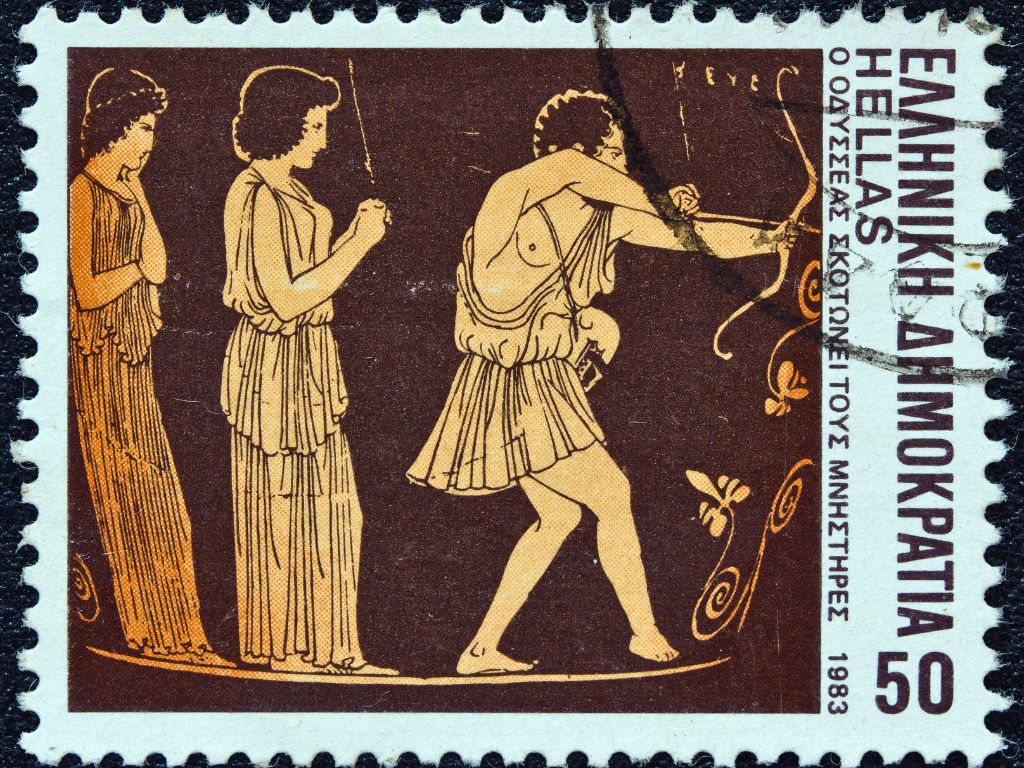
Odysseus, clever, daring, and favoured by the goddess Athena was the king of Ithaca and one of the masterminds behind the fall of Troy. It was his idea, the Dourios Ippos (the Trojan Horse), that helped the Greeks win the war.
But while the battle ended, his own journey home had just begun.
It took him over ten years to return to Ithaca. Some say he wandered across the whole Mediterranean. He faced monsters like the Cyclops, temptations like the Sirens, and moments of deep loneliness from the island of Calypso to the land of the Lotus-Eaters.
Fun fact: Did you know the word nostalgia comes from Greek? It’s made from nostos (homecoming) and algos (pain). The very idea of missing home has ancient roots. Odysseus felt it for Ithaca. And for those of us who’ve lived in many places, like I have, that feeling never really leaves. You just carry bits of each “home” with you.
Odysseus’ story is full of symbols and here I want to focus on this one: the journey itself. Not the ending. Not the homecoming. But everything in between. The trials, the growth, the waiting.
Here is the English translation of the famous poem Ithaka by Constantine P. Cavafy:
Ithaka
By C.P. Cavafy
(Translated by Edmund Keeley and Philip Sherrard)
As you set out for Ithaka
hope your road is a long one,
full of adventure, full of discovery.
Laistrygonians, Cyclops,
angry Poseidon, don’t be afraid of them:
you’ll never find things like that on your way
as long as you keep your thoughts raised high,
as long as a rare excitement
stirs your spirit and your body.
Laistrygonians, Cyclops,
wild Poseidon, you won’t encounter them
unless you bring them along inside your soul,
unless your soul sets them up in front of you.
Hope your road is a long one.
May there be many summer mornings when,
with what pleasure, what joy,
you enter harbors you’re seeing for the first time;
may you stop at Phoenician trading stations
to buy fine things,
mother of pearl and coral, amber and ebony,
sensual perfume of every kind—
as many sensual perfumes as you can;
and may you visit many Egyptian cities
to learn and go on learning from their scholars.
Keep Ithaka always in your mind.
Arriving there is what you’re destined for.
But don’t hurry the journey at all.
Better if it lasts for years,
so you’re old by the time you reach the island,
wealthy with all you’ve gained on the way,
not expecting Ithaka to make you rich.
Ithaka gave you the marvelous journey.
Without her you wouldn’t have set out.
She has nothing left to give you now.
And if you find her poor, Ithaka won’t have fooled you.
Wise as you will have become, so full of experience,
you’ll have understood by then what these Ithakas mean.
The journey itself is where we change. That’s what the poet Cavafy wrote about in Ithaca.
There’s a beautiful version read by Sean Connery on Youtube and it’s well worth listening to.
If you ever visit Ithaca, you will find it peaceful, humble. Not grand or flashy. The kind of place that doesn’t try to impress.
2. Daedalus and Icarus
Daedalus, a genius inventor, made wings so he and his son could fly and escape Crete. He warned Icarus not to go too high. But Icarus, caught in the thrill, didn’t listen and fell.
The usual message is that Icarus was too reckless. He flew too high, got too close to the sun, and fell. So, the lesson sounds like: don’t get too ambitious, be careful and listen to warnings.
Wait, is that the message or we were all fooled?
Some thinkers say that might be the wrong take. They argue the story could actually be about celebrating ambition and risk, not holding it back. Icarus flew as high as he could, chasing freedom and new possibilities, even if it cost him. The warning might be more about how society tries to keep people “safe” by limiting their dreams and creativity.
So, this myth could be about the tension between following your bold desires and the risks that come with it not simply “don’t try too hard.” It’s more complex than just “stay grounded.”
Where to go: Near Heraklion in Crete, you’ll find the Palace of Knossos, where the Minotaur’s maze was said to be. This is the place Daedalus was said to have designed. The ruins are rich in stories, and the site gives you a sense of the complexity he was known for.
Travel thought: With Icarus in mind, it’s easy to get caught in the rush. I invite you to slow down. Take in the details, not just the highlights. This is what you get when you visit Ikaria. One of the blue zone islands.
Ikaria is a peaceful Greek island where people live longer and happier lives. Life moves slower there, with simple meals, warm friendships, and plenty of time to enjoy nature.
Visiting Ikaria feels like stepping into a calmer, kinder world.

3. Sisyphus
Sisyphus was punished because he was very crafty and broke important rules. Here are a few reasons why:
- He tricked the gods by cheating death, when Thanatos (Death) came to take him, Sisyphus trapped him so no one could die for a while.
- He lied to the gods and revealed some of their secrets to humans.
- He acted selfishly and tried to avoid the natural order of life and death.
Because of these actions, the gods punished him by making him roll a heavy boulder uphill forever, knowing it would always roll back down. It was a punishment for trying to cheat fate and disrespect the gods.
What it tells us: Effort, even when it feels repetitive, has meaning. Even in the hard days, there’s something in showing up.
Where to go: Corinth was Sisyphus’s city. Nearby you can visit the ancient Corinth ruins, the Isthmus canal, Epidavros and Nemea.
Fun detail: In some versions, Sisyphus tricked death. Twice.
Philosopher Albert Camus used the story of Sisyphus to talk about how people face life’s challenges and its meaning or sometimes, lack of clear meaning. Camus said that even though Sisyphus’s task is endless and seems pointless, Sisyphus can find his own meaning by accepting and owning his struggle.
Camus imagined Sisyphus happy because he embraces what he must do instead of giving up or feeling defeated. It’s about finding purpose in the effort itself
4. Demeter and Persephone
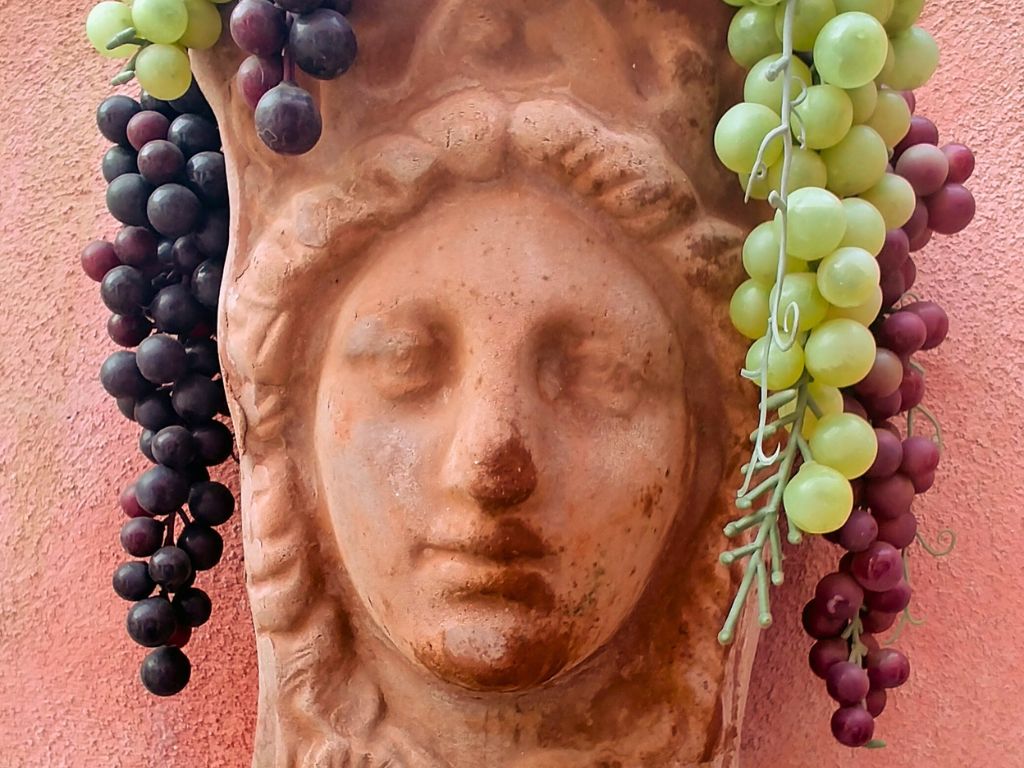
Dimitra (Demeter) was the goddess of the harvest and the earth’s bounty. She cared deeply for the crops, the seasons, and the cycles of life. When her daughter Persephone was taken to the underworld, Dimitra’s grief was so great that the earth itself stopped growing. Nothing would bloom or bear fruit until Persephone returned.
What it tells us: Life moves in cycles. Growth comes after stillness. Grief can shift into hope.
Wait! Is there a deeper message here?
Dimitra’s story teaches us about patience, loss, and hope. Sometimes, we go through seasons where everything feels still or empty, but life keeps moving in cycles. There’s a time for waiting and a time for growth. Her story reminds us that grief is real but so is the promise of renewal. It’s okay to take time to heal.
The story also speaks about connection. How what happens to one affects the whole. Dimitra and Persephone’s bond shows the power of love and loss working together, shaping not only their world but ours too.
So, the deeper message might be about embracing all parts of life—the hard times and the good—as essential for true growth and hope.
Where to go: Eleusis, just outside Athens, was the heart of the ancient mysteries. People came from all over the ancient world to understand life, death, and rebirth. Today, it’s quieter, but you can still feel the depth there.
If you’re curious: There’s a book, “The Road to Eleusis,” that digs deeper into the story. You don’t need to read it before visiting, but if you do, the stones speak louder.
The book mixes history, archaeology, mythology, and ethnobotany (the study of how people use plants) to propose that these mystical experiences were part of how the ancients understood life, death, and rebirth.
It’s a thought-provoking read that offers a fresh way to look at one of the most famous religious mysteries from ancient Greece, but keep in mind it’s a theory, not a proven fact.
5. Pandora’s Box
Pandora was given a box she was told not to open. When she did, all the troubles of the world flew out. But at the very bottom, one thing stayed: hope.
What it means today: When things go wrong or plans fall apart, regret can weigh heavy. But regret won’t fix anything. What matters is what you do next. There is always something to hold on to like a better plan, a fresh start, or a small win that helps you keep going.
Now, most people focus on the part where Pandora opens the box and lets all the troubles loose into the world (pain, illness, fear).
But there’s one thing that stayed inside: Elpis, the Greek word for “hope.”
Some say hope was trapped and never got out. Others say it stayed behind so we always have it close, even when life gets hard.
It makes you think. Maybe hope isn’t something that flies in to fix everything. Maybe it’s something we carry inside, quietly, after everything else has changed.
Where to go: Visit Athens and explore the ancient Agora, where stories of hope and human struggle echoed in everyday life. The idea of hope is woven into Greek culture and shows in how people bounce back, even now.
Fun fact: Pandora’s story was one of the first to explain why bad things happen, but also why we don’t lose heart.
6. Ariadne and Theseus
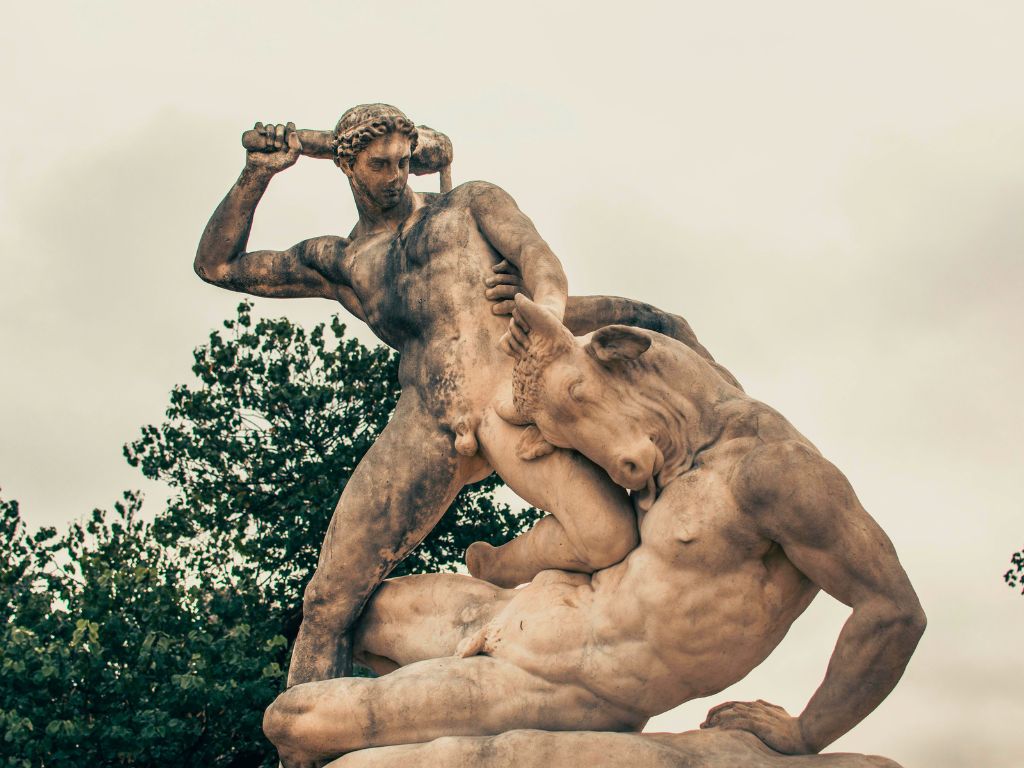
Theseus was a legendary king of Athens and one of the great heroes of Greek mythology.
He’s best known for killing the Minotaur, a half-man, half-bull creature trapped in a maze called the Labyrinth in Crete. Ariadne, the daughter of King Minos, gave him a thread so he could find his way out after killing the beast.
What it could possibly mean today: When you’re caught in a confusing situation or a big project, you don’t always need to know every step. Sometimes all you need is a thread, something simple to hold on to. It could be a routine, a small tool, or a reminder of why you started. At lease this is what I like to think of when things get complicated.
But let’s not sugarcoat it. Let’s see it as it is.
Ariadne helped Theseus win. He left her.
And that’s not a bitter or feminist take, it’s just the truth of the story.
She was the reason he got out alive.
Theseus left her in Naxos island. Alone.
What makes this story hit deeper is how many women gave their time, strength, and heart to someone else’s mission, only to be left behind once that mission was done. Let me explain.
Think about the fairy tales many of us were raised on.
Ariel in The Little Mermaid gave up her voice, her very ability to speak, to be with a man she’d just met. We were told that was love.
Belle in Beauty and the Beast falls in love with someone who keeps her locked in a castle. We were told it was romantic, but it mirrors emotional manipulation.
Cinderella was taught to stay quiet, clean, and wait for a prince to rescue her. We were told that was patience and goodness. Yet they were all staying in her house.
And Sleeping Beauty? The prince kisses her while she’s asleep and can’t say yes. We were told that was a fairytale ending.
But now, many of us see these stories differently. They raise real questions about consent, control, and what we were taught to admire as girls.
Where to go: The Palace of Knossos in Crete is where the myth takes place. Walking the ruins, you can almost picture the labyrinth’s twists and turns. The palace was so advanced for it time and the myth about the maze fits perfectly to describe the complexity of the whole structure.
Fun fact: The Palace of Knossos in Crete, is famous not only for its mythic labyrinth but also because archaeologists found one of the earliest known plumbing and drainage systems there. It included clay pipes and a system for running water, and evidence suggests the Minoan royals enjoyed hot and cold water.
7. Prometheus
Prometheus stole fire from the gods and gave it to humans. I am sure we agree that it was not all about warmth or light. It was about knowledge, power, and independence.
He challenged the rules to help people take control of their own fate.
His punishment? Eternal suffering, which shows how those who push boundaries often pay a heavy price.
The moral of the story?
Trying something new often feels risky. Changing your path, your career, or standing up for what matters, most likely it will not be easy. But this hardest path is the one that leads to real growth and change. Prometheus stands for the courage to act even when it means standing alone against the system.
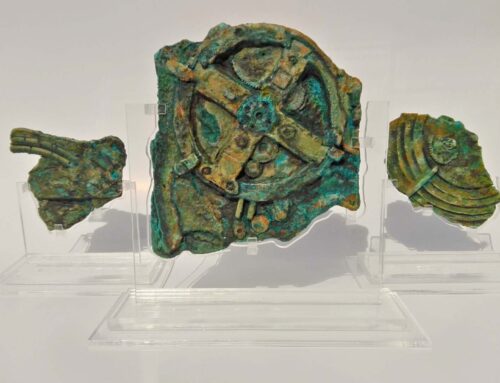
Where to go: In Athens, the National Archaeological Museum is home to incredible artifacts that reflect the spirit of Prometheus. Fire, creation, and human innovation. Among its treasures is the Antikythera mechanism, an ancient device often called the world’s first analog computer. This complex invention shows how humans, even thousands of years ago, pushed the limits of knowledge and technology to understand the world around them.
Fun fact: The name Prometheus comes from the ancient Greek word “promēthēs”, which means “forethought” or “the one who thinks ahead.”
These stories may be old, but they still speak to us because they show us parts of ourselves.
We see strength, mistakes, love, ego, risk, loss, and courage.
We see people trying, failing and starting again.
Maybe myths are mirrors. Maybe that’s why they last
If you’ve made it this far, thank you for walking through them with me.
Let’s keep asking questions, seeing deeper and travelling not just through places but through meaning.
This is what I aim for in every trip I plan!
*Disclaimer: This page might include affiliate links. If you decide to book something through one of them, I might get a little bonus, but it won't cost you anything extra.*