Moving to Greece? What Americans Need to Know
Moving to Greece? What Americans Need to Know


☞ Table of Contents:
Moving to Greece as an American? Let’s be brutally honest…
I want a slower pace of life! I want that sea view and fresh healthy food! I want to feel safe and enjoy my mornings without rushing.
How does this actually work?

Things that completely mess up your move to Greece
– First, you’ll fall in love with a place on holiday and assume it works for full-time life.
That island you visited or the beach town you had fun during summer, is amazing for two weeks but might drive you crazy when you live there year around.
Greece has two realities: postcard-perfect for tourists, and a daily grind for residents.
So, don’t fool yourself that you can figure out Greece from a two-week holiday.
– Second, you’ll pick housing before you understand the area, or commit to a lease before you know if you even like the neighborhood day to day.
My advice: Stop scrolling through Greek property listings.
You’re not ready yet. I know it’s tempting to look at all those gorgeous houses, but you’ll just end up overwhelmed and confused. Here’s what you need to figure out first.
What can’t you live without?
What does your visa actually let you rent?
How close do you need to be to hospitals, airports, or good transport?
What about your pets?
What does your actual daily routine look like?
Once you know these things, the property search becomes so much easier. You’ll know exactly what to look for instead of getting lost in pretty photos that don’t match your real life.
I help people work through these layers so they can search with purpose instead of stress.
When you’re clear on what matters, everything else falls into place.
– Third, you try to recreate your exact old life in a completely different country. This is a recipe for a big dissapointment. You’ll need to unlearn your American rhythms
That expectation of 24/7 convenience? The ability to get anything delivered at 2 AM? The reliably fast internet for your Zoom calls? Greece operates differently.
Pharmacies close by 2pm in small towns. Sunday closures are sacred. Your package might arrive next week – or after the next ferry comes.
– Fourth, you’ll believe some random person’s Facebook comment over doing real research.
Greek bureaucracy doesn’t care about your good intentions. What worked for someone else’s visa application last year might get yours rejected.
Before acting on forum advice, ask yourself: would you trust Yelp reviews for heart surgery?
– Fifth, Google Maps can’t show you the reality.
Choosing a home based on map distances alone is problematic. You need boots-on-the-ground knowledge!
- Which routes actually work year-round
- Where construction projects are planned (future highway)
- What looks like a convenient location might be unbearably loud during summer
Your best navigation tool? Old-fashioned local knowledge, the kind you can’t download.
The good news is the above mistakes are totally avoidable when you know what to watch out for.
Let’s break down some of your visa options. 📍
☞ Related: How a pre-move visit can make your Relocation to Greece smoother
Your visa options: Cutting through the confusion
Greece offers multiple paths to residency, but choosing the wrong one can cost you time, money, and peace of mind.
Here’s an updated 2025 breakdown of the three most common routes for Americans:
1. Digital Nomad Visa – For remote workers with foreign income
2. FIP Visa – For retirees/passive income earners
3. Digital Nomad residence permit – can be granted to those who:
- Entered Greece with a National Entry Visa (Digital Nomad Visa – Type D)
- Entered with a Uniform Visa (Type C)
- Entered with a passport stamp, in the case of Citizens of “Visa-free” countries
4. Golden Visa – For investors buying property (€250k+)
Each has strict requirements, hidden pitfalls, and tax implications, let’s demystify them.
Disclaimer:
Visa rules and tax policies change frequently. This overview is not legal advice. Consult a Greek immigration lawyer to assess your specific situation.

Greece’s Digital Nomad Visa: The essential guide (2025 update)
Greece now offers a dedicated Digital Nomad Visa, permitting remote workers to legally reside in the country while maintaining employment with overseas companies or clients. Here’s what applicants need to know:
Visa Basics
- Initial validity: 12 months
- Renewable for up to 2 additional years
- Minimum income requirement: €3,500 net monthly income
- Must maintain foreign employment/contracts
- Comprehensive health insurance mandatory
Eligibility Requirements
Applicants must demonstrate:
- Stable remote income from non-Greek sources
- Clean criminal record
- Good health status
- Valid passport
- Must be valid for 3+ months after your planned exit from the Schengen Zone
- Needs 2+ empty pages for stamps/visas
- Cannot be older than 10 years from issue date
Income Thresholds
- Single applicant: €3,500/month
- With spouse: €4,200/month (20% increase)
- Per child: Additional 15% of base amount
Required Documentation
- Passport valid for 3+ months beyond stay
- Completed visa application form
- Recent passport photos
- Proof of remote employment (contracts/client agreements)
- Financial documentation (bank statements/payslips)
- Clean criminal record certificate (less than 3 months old)
- Health insurance covering Greek residency
- Medical clearance certificate
- €75 application fee
Application Process
- Must apply in person at Greek consulate
- No option to convert tourist visas
- Processing times vary by consulate
Important Restrictions
- Does not permit local employment
- Cannot establish Greek business
- Income must remain foreign-sourced
Renewal Conditions
- Continued remote employment
- Maintained income level
- Valid health coverage
- Clean criminal record
The Financially Independent Person (FIP) Visa: Key Details
*(Updated for 2025 under Law 5038/2023)*
Who It’s For:
Non-EU citizens with stable passive income (pensions, investments, rentals) who want to live in Greece without working locally.
Critical 2025 Updates:
- Minimum income: Now €3,500/month (€4,200 with spouse)
- Stay requirement: 183 days/year to renew (strictly enforced)
- No gray areas: Even remote work for foreign companies voids eligibility
Why Legal Advice Is Non-Negotiable:
- Tax traps: Greece taxes worldwide income after 183 days (double-taxation risks for Americans)
- Documentation hurdles: Pension/401(k) withdrawals often need restructuring to qualify
- Regional differences: Some immigration offices demand extra proof for investment income
What Most Applicants Miss:
- Health insurance must be Greek-purchased (international plans often rejected)
- One income gap can trigger denial at renewal
- Biometric delays may require legal intervention
Greece’s Digital Nomad Visa Vs. FIP Visa (2025 Comparison)
1. Purpose & Eligibility
| Digital Nomad Visa | FIP Visa |
|---|---|
2. Financial Requirements
| Digital Nomad Visa | FIP Visa |
|---|---|
3. Duration & Renewal
| Digital Nomad Visa | FIP Visa |
|---|---|
4. Key Restrictions
| Digital Nomad Visa | FIP Visa |
|---|---|
5. Application Process
| Digital Nomad Visa | FIP Visa |
|---|---|
*Applying for Greece’s Digital Nomad Visa (2025): You can apply either from the U.S. (before arrival) at a Greek consulate (4–8 week processing) or from within Greece by converting your tourist visa (must apply within 90 days). Both require proof of €3,500+/month remote income, Greek health insurance, and a criminal record background check.
Key Difference: U.S. applications guarantee legal entry but face consulate delays, while in-Greece filings are faster but riskier if you overstay. Note: If applying locally, you’ll need a Greek tax number (AFM) and must avoid overstaying your initial 90-day visa.
Which Visa is right for you?
Choose Digital Nomad if you:
- Work remotely for a foreign company/clients
- Want flexibility to leave Greece frequently
Choose FIP if you:
- Have pension/investment income (no employment)
- Plan to live in Greece full-time (183+ days/year)
Note: Both visas do not lead to Greek employment or citizenship.
Pro Tip: Pair your FIP visa application with a tax residency assessment to avoid surprises. Many retirees unknowingly trigger Greek tax obligations by overstaying tourist visas.
The residence permit for Digital Nomads requires:
1. Valid Passport
It must:
- Be valid for at least 3 months after your planned exit from the Schengen area.
- Have at least 2 blank pages.
- Have been issued in the last 10 years.
2. Proof of Entry into Greece
- Either a passport stamp or a Digital Nomad Visa.
3. Solemn Declaration
A document stating that:
- You plan to live in Greece for remote work.
- You won’t work for any employer based in Greece.
4. Proof of Enough Money
- You must show a minimum monthly income of €3,500 (after taxes).
5. Residence Permit Application Form
- You must submit this online through the local government office where you’ll live.
6. Proof of Remote Work
- Documents showing your remote work status (requirements vary based on whether you’re employed, self-employed, etc.).
Greece offers both a Digital Nomad Visa and a Residence Permit for Digital Nomads, but they function slightly differently.
Key Differences in Greece
| Feature | Digital Nomad Visa (Type D) | Residence Permits for DNs |
|---|---|---|
| Validity | 1 year (renewable up to 3 years) | 2 years (renewable) |
| Application | At Greek Consulate before arrrival | In Greece (after entry) |
| Path to PR/Citizenship | No | Possible after 5 years (PR) |
| Tax Benefits | 50% reduction possible | Possible but longer stays may incur taxes |
| Flexibility | Must apply from home country | Can enter visa-free (e.g. as a tourist) and apply later |

Greece Golden Visa Program: Key Advantages 2025
1. Unrestricted Schengen Access
- Visa-free travel across 26 European countries
- No minimum stay requirements (only 7 days/year in Greece to maintain status)
2. Family Inclusion – It covers:
- Spouse
- Children under 21 (previously under 24)
- Parents of both applicant and spouse
3. Long-Term Benefits
- Permanent residency renewable every 5 years
- Pathway to Greek citizenship after 7 years of legal residence
- Right to rent out investment properties
4. Flexible Investment Options
- Real Estate Routes:
- €250,000: Convert commercial buildings to residential (any location)
- €400,000: Single property (120+ sqm) in most regions (mainland and some islands)
- €800,000: Athens/Thessaloniki/major islands (Mykonos, Santorini, etc.)
Alternative Investments:
- €400,000–800,000: 10-year hotel/tourist residence leases (zone-dependent)
- €500,000+: Fixed-term deposit in Greek banks
5. Business Permissions
- Can own shares in Greek companies and earn dividends
- Restriction: No direct employment in Greece
Critical 2025 Updates
New Regional Restrictions
- €800k minimum now applies to Athens, Thessaloniki, and popular islands
- €250k option limited to non-touristic restoration projects
Stricter Documentation:
- Proof of clean criminal record from all countries of residence (last 10 years)
- Health insurance covering €30,000+ in Greece
What most investors overlook:
- Double Taxation Risks: Greece taxes worldwide income after 183 days/year
Hidden Costs:
- 15–24% property transfer tax
- Annual ownership taxes (€3,000–15,000 depending on value)
- Processing Delays: Now 8–14 months due to backlog
Why professional guidance is essential
- Eligibility Verification: Many “qualified” properties fail due to zoning issues
- Tax Optimization: Structuring to avoid double taxation (especially for US citizens)
- Renewal Pitfalls: Missing the 7-day annual stay can void residency
Disclaimer:
Investment thresholds and rules are subject to change. Consult a Greek immigration lawyer and tax specialist before proceeding.
US – Greece Tax Nightmares
The Essentials of Navigating Greek & US Taxes
Good News First:
- Greece has no wealth tax (unlike Spain/France) (Greece has an annual property tax (ENFIA) based on real estate value, but it’s not a wealth tax, it only applies to real estate, not total assets.)
- The US treaty protects your salary/pension from double taxation
- Property taxes are lower than most US states (avg. €800/year on a €250k home)
When Taxes Kick In:
📍 183+ days in Greece = Tax residency (count all days, arrival/departure days)
| Salaries | No* | Yes |
| Pensions | No* | Yes (after 5 years) |
| US Rentals | Yes | Yes (after 183 days) |
| Capital Gains | Yes |
- Greek tax returns
Healtcare in Greece: What Americans need to Know (2025)
How it really works:
| Wait Times | ||
| English Speakers | ||
| Cost | ||
| Best For |
Healthcare reality check: critical notes (updated and clarified)
You need one of these
- Private Insurance (Minimum ~€30,000/year coverage) from:
- A Greek insurer (e.g., Interamerican, Allianz Greece) or
- An international/EU insurer (e.g., Cigna Global, AXA)
- Public Insurance (ESY): Only if you become a Greek tax resident (not required for Golden Visa).
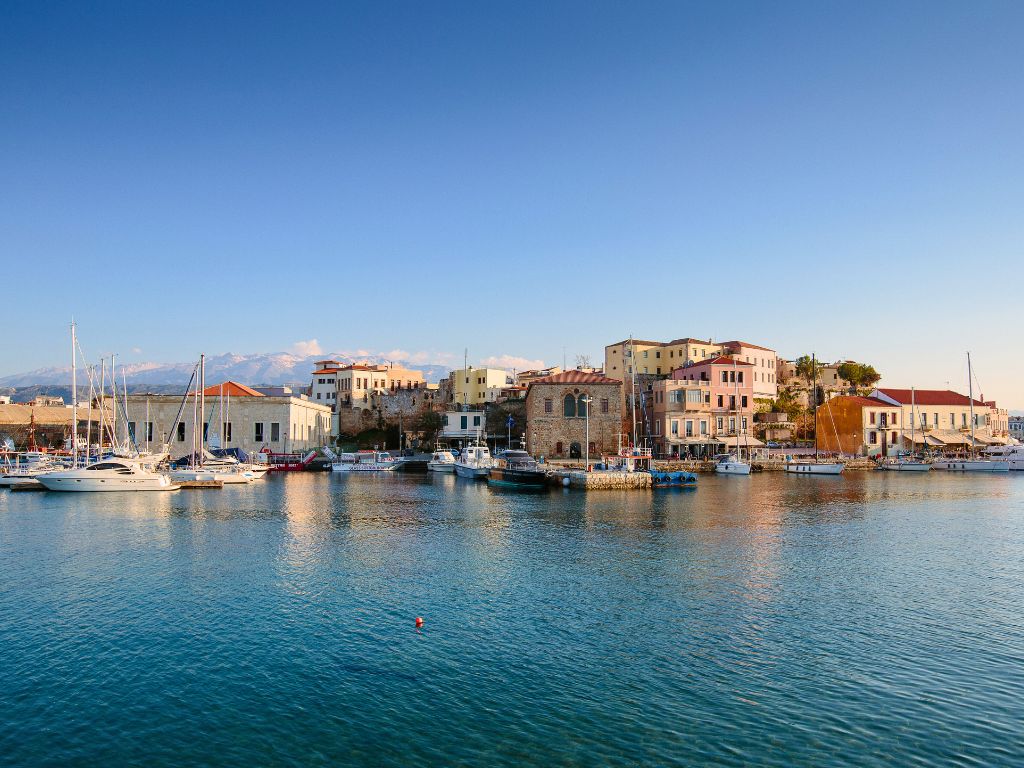
Where to live in Greece
- Busy and loud
Serious about moving to Greece? Here’s how I can help
 A structured 1:1 session to help you clarify the Help choosing a region that fits your lifestyle and personality Realistic guidance drawn from living this process Honest, direct answers without sugarcoating A scouting trip plan that goes beyond real estate Access to local knowledge and resources A plan that prepares you for the parts no one tells you about
*Disclaimer: This page might include affiliate links. If you decide to book something through one of them, I might get a little bonus, but it won't cost you anything extra.*